What to Expect Before, During, and After Cataract Surgery
Cataract surgery is one of the most common and safest eye operations. Knowing what happens at each stage makes it far less daunting.
 ELL Opticians teamSeptember 5, 2024Updated November 20266 min read
A cataract is a cloudy area in the lens of your eye, the clear part that helps focus light. It makes your vision cloudy, and surgery is the only way to remove it.1
Cataracts in Zimbabwe
Cataract is the leading cause of avoidable blindness in Zimbabwe.4 A survey of people aged 50 and over in Masvingo Province found that untreated cataract caused 65.2% of blindness, followed by glaucoma at 16.3%. Only just over half (52.2%) of the people blind from cataract had had surgery.5
Sight lost to cataract can usually be restored, so the sooner a cataract is picked up, the sooner you can plan treatment.
Where ELL Opticians fits in: cataract surgery is performed by an eye surgeon (ophthalmologist). Our optometrists can check whether a cataract is affecting your vision, refer you for surgery, and make your new glasses once your eye has healed.
Do I need surgery?
Your eye doctor will usually suggest surgery when cataracts make everyday activities like reading, driving or watching TV difficult. It may also be recommended if a cataract blocks the doctor's view of the back of the eye, which they need to treat conditions such as diabetic retinopathy. There is no need to rush: ask about the risks and benefits so you can decide when it's right for you.1
Before surgery
- About a week before, your eye is measured so the surgeon can choose the right artificial lens (intraocular lens, or IOL).1
- Tell your doctor about all your medicines. You may be asked to pause any that increase bleeding, and you may be given antibiotic eye drops to start beforehand.1
- You will probably be asked not to eat or drink for a few hours before the operation.1
- Arrange for someone to take you home. You won't be able to drive afterwards.1
On the day
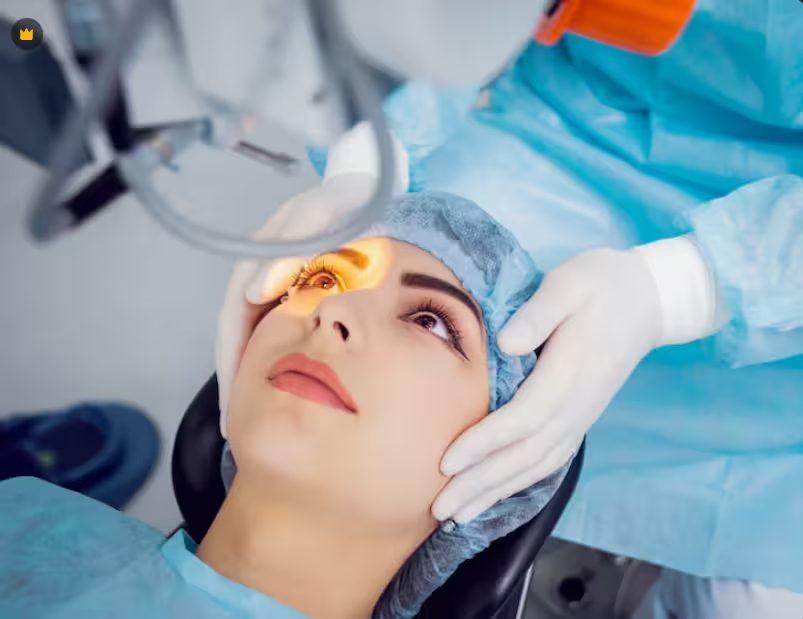
You will usually be awake. Numbing drops are put in your eye, then the surgeon breaks up and removes the cloudy lens with small tools and puts in the new artificial lens. You may see lights or movement, but not the procedure itself, and it is almost painless.1 The operation itself usually takes 20 to 45 minutes2, though you should plan for about an hour.1
After surgery
You will rest for a short time before going home with eye drops, and possibly an eye shield to protect your eye.1
- Mild itchiness, discomfort or sensitivity to light usually improves within 1 to 2 days.1
- For a few weeks, avoid touching your eye, bending over and heavy lifting.1
- Don't drive until your vision is back to normal, don't swim, keep water out of your eye and avoid eye make-up while it heals.2
- Full healing takes about 8 weeks, with follow-up check-ups along the way.1
According to the US National Eye Institute, about 9 in 10 people see better after surgery. Vision may be blurry at first, colours may look brighter, and you may need a new glasses prescription once your eye has fully healed.1 If both eyes have cataracts, they are operated on separately, usually about a month apart.1
Later on: "secondary cataract"
Weeks, months or even years after surgery, some people develop a cloudy layer behind the new lens, called a secondary cataract or posterior capsule opacification. It is treated with a quick laser procedure.1
Noticing cloudy or hazy vision?
Book an eye exam and we'll check whether a cataract could be the cause.
References
- National Eye Institute (NIH). Cataract Surgery. https://nei.nih.gov/eye-health-information/eye-conditions-and-diseases/cataracts/cataract-surgery
- NHS. Cataract surgery. https://www.nhs.uk/tests-and-treatments/cataract-surgery
- MedlinePlus (U.S. National Library of Medicine). Cataract removal. https://medlineplus.gov/ency/article/002957.htm
- Zimbabwe Independent. Improving access to cataract services. https://theindependent.co.zw/business-digest/article/200016374/improving-access-to-cataract-services
- Macheka B, Joseph J, Minnies D, et al. Rapid assessment of avoidable blindness in Masvingo Province, Zimbabwe. SA Ophthalmology Journal, 2021. https://issuu.com/newmediamedical/docs/saoj_vol16_no2/s/12204798
This article is general information, not a diagnosis. Speak to an eye care professional about your own eyes.